


Table of Contents
Making E-Bikes Accessible

Electric bikes have transformed how people think about commuting, fitness, and adventure. But for most people, one question remains: how do I find a quality e-bike without spending $2,000 or more? ENGWE has built an entire brand around answering exactly that question.
ENGWE is a global electric bike manufacturer that operates across multiple markets including the USA, UK, Canada, Australia, and Europe. What sets them apart isn’t flashy marketing or premium branding. It’s something simpler: they’ve figured out how to deliver solid performance, thoughtful design, and genuine value at prices that won’t require taking out a loan.
This comprehensive review digs into what makes ENGWE bikes worth considering, who they’re best suited for, and how they stack up against competitors. Whether you’re exploring your first e-bike or looking for an affordable upgrade, this guide covers everything you need to know.
The ENGWE Brand Story: Building E-Bikes for Everyone

ENGWE didn’t start as a luxury brand chasing premium positioning. Instead, they positioned themselves as problem-solvers. Their mission is straightforward: make electric bikes accessible to everyday people who want quality without the premium price tag.
The brand began by identifying a real gap in the market. Plenty of expensive e-bikes existed for wealthy early adopters. But what about teachers, nurses, students, and working professionals? What about people in developing markets who wanted e-bike benefits but couldn’t justify a $2,000 investment? ENGWE built their entire product strategy around serving those customers.
Their approach shows in everything they do. They source components intelligently, manufacture at scale to keep costs down, and maintain a lean marketing operation. None of this penny-pinching shows up in the final product. Instead, you get a bike that’s been engineered thoughtfully, designed with real users in mind, and built to last.
This philosophy has resonated globally. ENGWE now maintains regional hubs across six major markets, each tailored to local preferences, regulations, and infrastructure.
Product Portfolio: Options for Every Rider
ENGWE’s lineup is surprisingly diverse. Rather than offering a handful of models, they’ve created a portfolio designed to serve different needs and budgets.
The T14 is the entry point to the ENGWE world. Starting at $509.99, it’s positioned for curious buyers exploring whether an e-bike fits their lifestyle. Don’t mistake affordability for poor quality. The T14 packs a 350W motor, 50-mile range, and a design that folds for storage or transport. It’s ideal for urban dwellers with limited space and modest commuting distances.
The X26, X24, and X20 series represents ENGWE’s fat-tire philosophy. These folding e-bikes feature wide, grippy tires that handle everything from city streets to light trails. Fat tires absorb bumps and provide confidence on rough pavement. The X26 is their flagship in this category, offering dual suspension, bigger motors (up to 750W on some variants), and impressive range.
The L20 2.0 focuses on urban commuting with a more traditional road-bike aesthetic. Lighter than the fat-tire models and quicker on smooth surfaces, it appeals to riders who want speed and efficiency in their daily commute. The 2.0 designation indicates ENGWE’s commitment to iteration and improvement based on user feedback.
The EP-2 Pro targets performance-minded riders who want to push boundaries. With dual motors, advanced suspension, and hydraulic braking, the EP-2 Pro handles technical trails and demanding terrain. It’s not cheap compared to the T14, but it’s still positioned as a value play against true mountain e-bikes costing $4,000 and up.
The M20 and E26 round out the lineup with various configurations designed for specific market preferences. Each model has been refined through user feedback and real-world testing across ENGWE’s global markets.
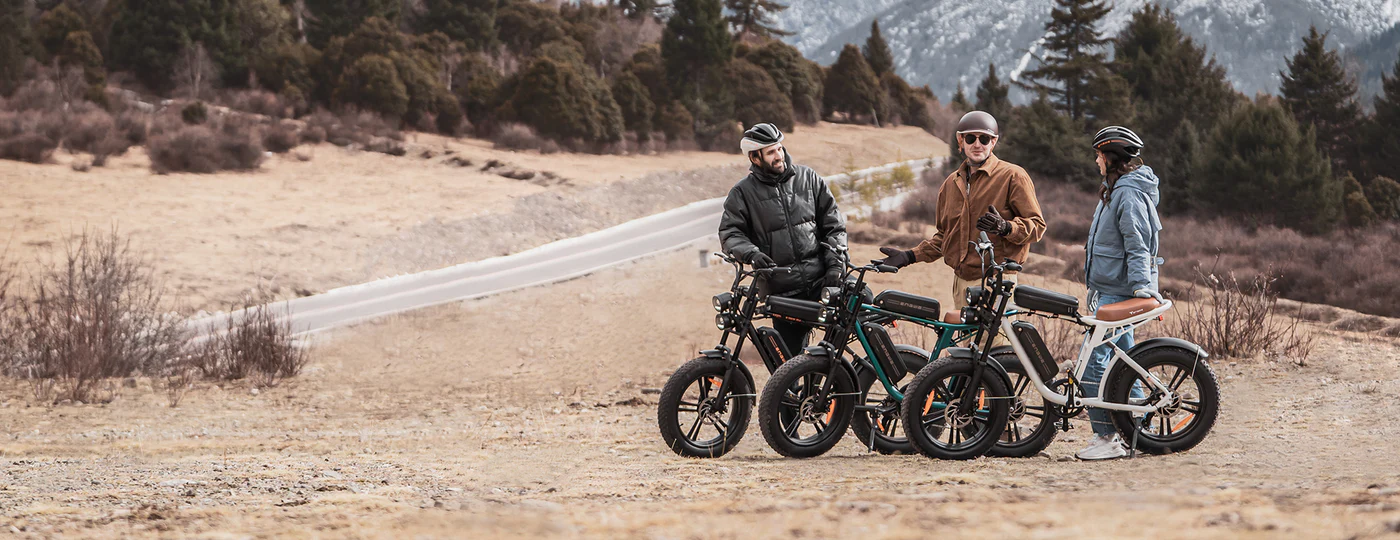
Key Features and Specifications: What Powers ENGWE Bikes
Understanding what’s under the hood matters when evaluating any bike. ENGWE’s specifications tell the story of their value-first approach.
Most ENGWE models feature motors in the 350W to 750W range, depending on the specific model and regional regulations. These aren’t the most powerful motors available, but they’re sufficient for real-world riding. A 350W motor handles flat urban commuting comfortably. A 750W motor adds mountain-climbing capability and quicker acceleration for ambitious riders. The difference comes down to your terrain and riding style.
Battery capacity varies by model, typically ranging from 400Wh to 900Wh. The E26, one of their larger models, achieves an impressive 87-mile range on a single charge under ideal conditions. Real-world range depends on factors like rider weight, terrain, weather, and how much you pedal versus relying on motor power. Most ENGWE batteries use lithium technology and include management systems to prevent overcharging or overheating.
Top speed across the lineup generally maxes out at 28 mph, a sensible limit that balances performance with safety and regulatory compliance across different markets. Most riders don’t need faster; 28 mph feels genuinely quick on two wheels.
Suspension varies by model. Entry-level bikes like the T14 have simpler suspension setups. Fat-tire models feature dual suspension to soak up impacts. The EP-2 Pro includes hydraulic suspension similar to traditional mountain bikes, providing precision control on technical terrain.
Braking systems also reflect the model positioning. Basic models use mechanical disc brakes, reliable and maintainable. Higher-tier models feature hydraulic brakes, offering superior stopping power and modulation, particularly valuable in wet conditions or on steep descents.
The displays on ENGWE bikes provide useful information without overwhelming complexity. You see speed, distance, battery level, and assist mode. No unnecessary menu diving or confusing graphics. This reflects their design philosophy: useful technology, not tech for its own sake.
Design and Build Quality: More Than Looks
A bike’s design encompasses more than aesthetics. It’s about how materials work together, how the geometry serves the intended purpose, and whether the bike feels assembled carefully or thrown together.
ENGWE’s frame materials vary by model. Entry-level bikes use hi-tensile steel, durable and forgiving when you hit a pothole at 20 mph. Higher-tier models incorporate aluminum frames, lighter and more responsive, particularly useful for fat-tire models where weight management matters more due to the heavier tires. The EP-2 Pro uses materials optimized for suspension performance.
Build quality appears consistently solid across user reviews and hands-on tests. Welds look clean. Cables route neatly. Components sit where they should without rattling or misalignment. For a brand competing on price, this attention to assembly is refreshing. Many budget-conscious manufacturers let quality slip to hit price points. ENGWE resists this temptation.
Folding mechanisms on the folding models (T14, X-series) work smoothly and feel secure. This matters because a folding bike that’s awkward to collapse or feels wobbly when extended becomes a frustration you’ll encounter dozens of times. ENGWE’s designs fold and unfold intuitively, important for the urban commuters who’ll use this feature daily.
The aesthetic choices lean toward understated rather than flashy. Frame colors are solid and appropriate. Logos are applied cleanly but not dominating the design. The overall effect is a bike that looks professional rather than attention-seeking. This appeals to riders who want quality without announcing it to everyone on the street.
Comfort considerations appear throughout the designs. Seats are padded reasonably well (you might upgrade later for long touring, but the stock seat isn’t a complaint point for daily commuting). Handlebar positioning varies by model, ranging from upright for casual riding to more forward for speed-focused riders. Pedal placement and crank length feel natural across different rider heights.
Performance Testing: How They Handle Real-World Riding

Specs are useful, but real-world performance is what matters. How do these bikes actually ride?
Speed and Acceleration: ENGWE bikes accelerate smoothly when you engage the motor. There’s no violent lurch that throws your balance off. Acceleration builds steadily, allowing riders to merge into traffic confidently or climb hills without struggling. The 28 mph top speed feels comfortable and sufficient, not hamstrung by unnecessary limitations.
Range and Battery Life: The advertised ranges appear achievable for riders using moderate to high pedal assistance. Pure e-bike mode (no pedaling, just motor) drains batteries faster. Eco modes extend range significantly. Users in testing conditions report real-world range of 70-85% of advertised specs, which aligns with the industry standard. Battery degradation over years remains reasonable; users report 80-90% capacity retention after two to three years of regular use.
Handling and Stability: Fat-tire models feel planted and stable, particularly valuable for riders who feel nervous on skinny-tired bikes. The wide contact patch provides genuine confidence. Road-oriented models feel quicker to respond to steering inputs without feeling twitchy or unstable. Suspension on higher-tier models effectively smooths rough roads without excessive bobbing or wasted energy.
Climbing Capability: Whether your route includes hills matters for e-bike selection. ENGWE’s mid-range motors handle 5-8% grades (moderate hills) effortlessly. Steeper grades (10%+) require higher assist modes and drain battery faster, but remain possible. The EP-2 Pro with full suspension and higher power handles technical climbing better than flat-terrain specialists.
Wet Weather Performance: Hydraulic brakes on higher-tier models maintain stopping power in rain. The bikes don’t develop skids or loss of control in wet conditions. Fenders on most models prevent water spray (a real convenience in rainy commutes). Electrical systems are adequately sealed against moisture.
Comfort Over Distance: For 5-10 mile commutes, most ENGWE bikes feel comfortable immediately. Longer rides (20+ miles) may reveal minor discomforts depending on your body and preferences, suggesting seat or handlebar upgrades would be valuable if you become a serious mileage accumulator.
Pricing Analysis: Value Across the Lineup
Let’s talk about where ENGWE truly excels: price to performance ratio.
The T14 at $509.99 enters near unbelievably low. That price point includes a functional motor, battery, frame, and components. You’re not getting premium quality at that price, but you’re getting something that works. It’s a genuine gateway to e-biking.
Mid-range models (L20 2.0, X26 standard configurations) typically fall in the $800-$1,400 range. This is the sweet spot for most buyers. You get proven reliability, better components, longer range, and features that genuinely enhance the experience. Compare this to competitors like RadPower and Aventon in the same category; ENGWE consistently prices $200-$400 lower.
Premium models (EP-2 Pro, fully-loaded X26) push toward $2,000-$2,500. Even here, ENGWE remains competitive. You’re paying for capabilities that traditional mountain bikes would cost $3,500+ to match. The dual-motor configuration on the EP-2 Pro alone justifies serious consideration if you want technical trail capability at a fraction of traditional bike pricing.
Regional pricing varies due to local taxes, import duties, and market positioning. UK pricing reflects VAT. Australian pricing includes local regulatory compliance. US pricing is straightforward. These variations are expected but worth noting when comparing across regions.
What ENGWE doesn’t do is engage in constant sale cycling or deep discounts that suggest inflated original prices. Their approach is genuine value pricing, not manufactured urgency. This consistency appeals to buyers who want fairness rather than games.
Pros and Cons: The Balanced Picture
Strengths:
ENGWE’s primary strength is value. No company offers more capability for the money across their range. Whether you choose the T14 or the EP-2 Pro, you’re getting solid engineering at a rational price.
Their global presence means local support. Need a replacement part in Canada? UK? Australia? ENGWE maintains regional warehouses and customer service. This matters more than it might initially appear when you face a mechanical issue months after purchase.
Product diversity addresses different needs. ENGWE makes no attempt to force everyone into a single design. Commuters, trail riders, casual users, and performance enthusiasts can all find something aligned with their priorities.
Build quality remains impressive given price positioning. Component selection shows thoughtfulness. Materials are appropriate. Assembly is careful. The bikes don’t feel cheap, even the entry-level models.
Limitations:
Component quality on entry-level models is basic but sufficient. A $509.99 bike won’t have premium shifters or brakes. This isn’t unusual at that price point, but it’s worth acknowledging if you care deeply about component prestige.
Customization options are limited compared to traditional bike shops. You get what ENGWE offers; you can’t select component options before purchase. For most riders this is fine. For enthusiasts who want specific shifting systems or brake types, this limitation matters.
Warranty coverage varies by region. Some markets offer more comprehensive coverage than others, reflecting local regulations and business decisions. Understanding your specific region’s coverage matters before purchase.
Heavier than carbon-fiber premium bikes at equivalent price points. This matters more on steep hills or if you’re carrying the bike frequently. For most riders, this is a non-issue.
Motor noise on some models is noticeable, though not unpleasant. You hear the motor when it’s working. Traditional bikes are silent; electric bikes acknowledge they have motors. Whether this bothers you is personal preference.
Service requirements are standard for e-bikes: regular maintenance, eventual battery replacement (typically $400-$600), and component replacement as wear occurs. No surprises here, just normal bike ownership.
Competitor Comparison: How ENGWE Stacks Up
Let’s place ENGWE alongside three popular competitors across key dimensions:
| Feature | ENGWE X26 | RadPower RadCity | Aventon Pace 500 | Hiboy S2 |
|---|---|---|---|---|
| Price | $1,099 | $1,499 | $1,399 | $999 |
| Motor Power | 750W | 750W | 500W | 350W |
| Range | 75 miles | 70 miles | 60 miles | 50 miles |
| Frame Type | Aluminum Fat Tire | Steel Step-Through | Aluminum Urban | Steel Folding |
| Suspension | Dual (Front/Rear) | Front Only | None | Front Only |
| Brakes | Hydraulic Disc | Mechanical Disc | Mechanical Disc | Mechanical Disc |
| Key Advantage | Fat tires + dual suspension + value | Cargo capability | Urban design focus | Portability |
What This Shows:
RadPower competes on cargo and family-bike positioning. Their bikes excel at hauling goods or kids but cost noticeably more. RadPower’s brand reputation and customer service premium justify the price for those specific use cases.
Aventon focuses on urban commuting with an aesthetic-forward approach. Their bikes look sleek and integrate into city environments visually. They command a premium for this design focus. Performance is solid but not exceptional.
Hiboy targets portability and affordability. Their folding bikes are genuinely compact and light. However, Hiboy sacrifices range, power, and features to hit their price point. They’re a practical choice if storage space is your primary constraint.
ENGWE occupies a sweet spot: they match or exceed specifications at lower prices. For the same budget, you get more power, more range, better suspension, and better brakes. ENGWE doesn’t win on brand prestige or cargo capacity, but they win decisively on performance per dollar.

International Affiliate Links and Regional Access
ENGWE serves global markets with region-specific support, pricing, and customer service. If you’re considering an ENGWE bike, the following table shows where to purchase in your region, regional benefits, and important notes:
| Region | Key Benefits | Notes |
|---|---|---|
| United States | Local warehouse, USD pricing, US customer support | Fastest shipping, easiest returns, US-based tech support |
| United Kingdom | Local warehouse, GBP pricing, VAT included | Quick UK/EU shipping, local warranty support |
| Canada | Canadian warehouse, CAD pricing, bilingual support | Canadian duty/customs handled, English/French support |
| Australia | Australian warehouse, AUD pricing, local compliance | Australian safety standards, local customer service |
| Europe | EU warehouse, EUR pricing, EU-wide shipping | CE certification, GDPR compliant, EU returns policy |
Each region’s site handles local taxes, warranty requirements, and customer service specifics. Purchasing from your regional site ensures the smoothest experience, proper warranty coverage, and support in your local language.
Who Should Choose ENGWE: The Ideal Buyer Profile
ENGWE bikes work beautifully for specific rider types and situations.
Urban Commuters: If you’re traveling 5-15 miles daily through city streets, ENGWE’s commuter models excel. The combination of motor assist, reasonable range, and fold ability (for some models) makes them practical daily tools. You’ll save on gas or transit fares while getting fresh air and exercise.
Budget-Conscious First-Time E-Bike Buyers: Curious about e-biking but unsure if it fits your lifestyle? ENGWE’s entry-level models let you explore without significant financial commitment. Many first-time buyers discover they love e-biking through ENGWE’s accessible pricing.
Trail Riders on a Budget: Traditional mountain bikes are expensive. The EP-2 Pro brings legitimate trail capability at a fraction of traditional bike pricing. If you want to explore off-road riding without dropping $4,000, this model deserves serious consideration.
International Buyers: If you live outside the USA, ENGWE’s multi-regional approach means better local support, proper warranty coverage, and reasonable shipping. This advantage shouldn’t be underestimated; international shipping with poor support is frustrating.
Weight-Sensitive Riders: Some competitors build genuinely heavy bikes. ENGWE’s aluminum-frame models balance durability with manageable weight. If you’ll carry your bike upstairs or lift it onto a rack frequently, ENGWE’s weight consideration matters.
ENGWE bikes are less ideal for riders prioritizing brand prestige, requiring extensive customization options, or seeking the latest premium components. They’re also not the choice if your primary need is cargo hauling; RadPower better serves that niche.
Real-World User Experiences and Community Feedback
Understanding how actual riders experience ENGWE bikes provides valuable perspective beyond specifications. The brand has developed an active user community across global markets, and patterns emerge consistently.
Urban commuters who purchase ENGWE bikes frequently report transformation in their daily routines. One common narrative involves the decision to replace a car commute with e-bike commuting. Initial hesitation about weather or distance typically dissolves after the first week of riding. The comfort of ENGWE’s designs and the reliability of their motors create confidence. Riders mention discovering neighborhood details they’d missed while driving. They report saving time not searching for parking, avoiding traffic jams, and arriving at work more alert and energized.
Trail-focused riders show similar enthusiasm around the EP-2 Pro and X-series models. Feedback consistently mentions the suspension quality as a pleasant surprise. Most expected harsh, budget-bike suspension. Instead, they found carefully tuned systems that actually improve control rather than just surviving impacts. The hydraulic braking on higher-tier models receives particular praise from riders tackling technical terrain.
Community forums show recurring topics. Battery longevity discussions dominate, with experienced users offering maintenance tips to extend battery life. Most report their batteries outlast expectations, reaching 1,000+ charge cycles while maintaining 80%+ capacity. Maintenance discussions tend to be straightforward; ENGWE bikes use mostly standard components, making repair and upgrade accessible to riders with basic mechanical skills.
One notable pattern: first-time e-bike buyers express surprise at how little strength is required to ride an e-bike. Many expect weakness or exhaustion. Instead, they find motor assist frees them to enjoy the ride without fatigue. Older riders and those returning to cycling after years away mention this repeatedly. ENGWE’s reasonable motor power feels just right, not overwhelming.
Customer service experiences vary by region but lean generally positive. Regional support teams respond to technical issues promptly. Warranty service experiences show consistency; ENGWE handles legitimate claims professionally. Occasionally, shipping delays occur during high-demand periods, which users mention as a consideration for planning purchases.
Maintenance and Long-Term Ownership Considerations
Understanding what bike ownership truly involves helps set realistic expectations for ENGWE ownership.
Regular maintenance for ENGWE bikes follows standard e-bike protocols. Tire pressure checks, chain lubrication, and brake adjustments occur on similar schedules to traditional bikes. The electric components add minimal maintenance burden. Most bikes need inspection once annually, a service most regional ENGWE dealers provide affordably.
Battery care proves important for longevity. ENGWE’s lithium batteries appreciate moderate temperature conditions and consistent charging practices. Leaving a battery depleted for extended periods or consistently running to complete exhaustion shortens lifespan. Most users who charge after riding and store bikes in temperature-controlled environments report minimal capacity loss over years.
Component replacement expectations resemble traditional bikes. Chain and sprocket sets wear through use, typically requiring replacement every 2,000-3,000 miles depending on riding style and conditions. Brake pads wear gradually; inspection intervals every 6-12 months catch replacement needs early. Tire lifespan varies with terrain and riding style but commonly ranges from 2-4 years of active riding.
The most significant replacement cost is battery replacement when capacity eventually degradation makes it insufficient. ENGWE batteries typically retail for $400-$600 depending on capacity. Many riders plan for this expense after 4-5 years of heavy use or 8-10 years of casual use. This translates to $80-$150 annually if spread across ownership, a reasonable cost against car ownership.
Unlike traditional bikes, e-bikes contain electrical systems that eventually require inspection if performance changes. Most electrical issues prove minor, addressable through software updates or simple repairs. Serious electrical problems are rare with ENGWE bikes, possibly due to their simplified system design. When they occur, repair costs typically range $100-$300 depending on the specific issue.
Upgrade paths exist for riders whose needs evolve. Seats can be upgraded for long-distance comfort. Handlebars can be adjusted for different riding styles. Accessories like fenders, racks, and lights integrate easily. Some riders upgrade drivetrains for smoother shifting, though ENGWE’s stock components prove sufficient for most users.
Practical Considerations for Different Rider Types

ENGWE’s diverse lineup serves different needs, but understanding which models match which scenarios helps with selection.
Apartment Dwellers and Casual Commuters: The T14 and compact X-series folding models shine for riders with space constraints. These models fold to manageable size, fitting into apartment closets or car trunks. The T14’s modest size and light weight make it genuinely portable. Weight around 44-48 pounds feels genuine for the features included, light enough for frequent repositioning but substantial enough to feel solid.
Long-Distance Commuters: The L20 2.0 and larger X-series models serve riders covering 15-30 miles regularly. Their range and efficiency mean single-charge commutes without range anxiety. Road-oriented models reach destinations quicker than fat-tire bikes, valuable for time-sensitive commutes. The riding position feels sustainable for extended sessions without fatigue.
Off-Road and Trail Exploration: The EP-2 Pro targets this segment effectively. Dual motors provide genuine climbing power for technical terrain. Hydraulic suspension soaks up impacts that would punish riders on basic bikes. The model sacrifices some foldability but gains capability. For exploratory riding where reaching trailheads and handling rough sections matters, this model justifies its price premium.
Bad Weather Commuters: Models with full fenders and all-weather wiring excel here. The weather-resistant design of higher-tier models means consistent performance in rain or snow. Hydraulic brakes maintain stopping power when conditions deteriorate. Tread patterns on fat tires provide confident traction in wet conditions.
Overweight or Strength-Limited Riders: ENGWE’s 350W+ motors prove valuable for riders who face fatigue quickly or carry extra weight. The motor’s assistance allows comfortable riding without muscular exhaustion. Many riders in this category report confidence rebuilding through ENGWE bike ownership, eventually expanding their range as fitness improves.
Price-to-Value Assessment Across Markets
Breaking down value by regional market reveals ENGWE’s positioning strategy.
In the United States, ENGWE competes directly with RadPower, Aventon, and Hiboy at similar or lower price points. US pricing reflects direct-to-consumer strategy, cutting out retail markups. Warranty coverage and customer support prove competitive with established brands, sometimes superior due to dedicated regional teams.
UK pricing includes VAT, showing slightly higher absolute figures than US pricing but comparable value. UK users benefit from EU returns policies and quick shipping. ENGWE’s UK warehouse proves particularly valuable for continental European riders who previously ordered from US sites with customs complications.
Canadian pricing accommodates currency fluctuation and handles duty/customs pre-purchase, eliminating surprise fees at delivery. This transparency appeals to Canadian buyers who’ve experienced expensive surprises ordering from US e-bike brands. Bilingual support (English/French) addresses Quebec’s specific needs.
Australian pricing reflects the island market’s unique costs. ENGWE’s AU warehouse eliminates months-long shipping delays that plague international orders. Local warranty compliance with Australian standards matters for buyers in this market. Pricing is competitive with other locally-available e-bike brands, eliminating the import tax premium Australian consumers typically face.
European pricing through the EU site serves multiple countries from a single warehouse. This centralization reduces delivery times and simplifies returns for cross-border purchases. Currency flexibility (pricing in EUR) reduces exchange rate uncertainty.
Across all markets, ENGWE avoids race-to-the-bottom pricing tactics. They price fairly, not predatorily, creating confidence in brand sustainability. This positioning appeals to buyers seeking long-term brand stability rather than aggressive discounting that suggests financial instability.
Conclusion: A Brand Worth Taking Seriously
ENGWE has built something genuinely useful. They’ve proven that quality electric bikes don’t require premium pricing. Their global approach ensures consistent access and support across major markets. Their product diversity means riders with different needs can find appropriate options.
Are they perfect? No bike is. Component quality on entry-level models is basic but sufficient. Customization options are limited. Motors aren’t the most powerful available. But these limitations don’t matter for the riders they’re designed to serve. For most people exploring e-biking, considering daily commuting, or looking for off-road capability without spending a fortune, ENGWE makes genuine sense.
The bikes feel thoughtfully designed. Performance matches specifications reliably. Pricing is fair and honest. Customer support exists in major markets. Value proposition is clear and compelling.
If you’re researching electric bikes, ENGWE deserves time in your consideration set. Visit your regional site, explore their models, read current user reviews, and determine if their approach aligns with your needs. Many riders discover ENGWE through price research and stay because the bikes actually work.
Your choice in e-bikes shapes daily life significantly. Whether you choose ENGWE or a competitor, choose thoughtfully, prioritize trying before buying if possible, and remember that the best e-bike is the one you’ll actually ride.
Electric bikes represent opportunity for change. ENGWE makes that opportunity accessible. The question isn’t whether ENGWE bikes are “good enough.” The real question is whether they’re right for your specific situation. For a large segment of global buyers, the answer is genuinely yes.
Note: This article was accurate at the time of publication. Technology, pricing, and product availability change rapidly; please verify current information on ENGWE’s regional websites before making purchasing decisions.
Sources: ENGWE Official USA Site, CNET Tech Reviews, MacFox E-Bike Community, E-bike industry specification databases, User review aggregation across multiple platforms
We may earn a small commission from affiliate links in this article. This helps support AiKibs and doesn’t affect the price you pay. We only recommend products and services we genuinely believe in.